Awareness Before Action: The Hidden Dynamics in Client Conversations
 Delores Carter
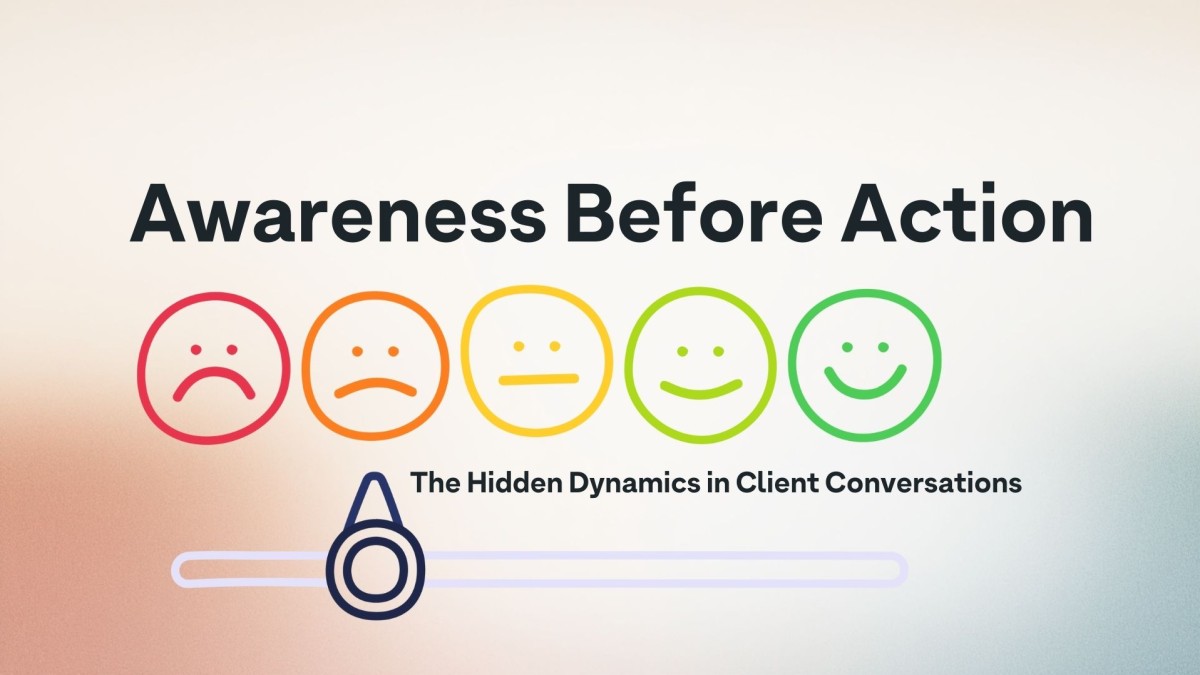
Strong behavior plans fail when clients are overwhelmed. Learn how awareness before action improves client conversations and training results.
Pop quiz: who’s easier to understand – the dog or the client? If you answered, “obviously the dog!” or something similar, welcome to the team! Most dog pros are completely fluent in dog body language. We invest time, money, and effort into learning their language so we can help them better. We also need to be equally skilled in having client conversations. Without that skill, even the best behavior plan might not lead to success for us, our clients, or the dogs. Understanding dogs isn’t the hard part. It’s understanding where a client is emotionally—before we jump to action—that often determines whether a behavior plan works or not.
Why behavior plans fail before training even begins
Dog pros are fully capable of creating effective, elegant behavior plans. In fact, we often excel at developing these plans. We understand what the dog needs—whether it's skills, better welfare, management, or medical support. Our clients simply want relief from the daily struggles they face with their dog. When problematic behavior impacts a client’s well-being, they might not have the emotional capacity to commit to a plan. A burned-out client struggles to absorb new information, practice new skills, and change their own behavior—yet that’s exactly what we’re asking of them.
What dog pros miss in early client conversations
It’s very common to sit down with a new client and hear about how difficult their dog is. We’ve all taken the “bad dog” inventories. After a moment to vent, can the client say anything good about the dog? Sometimes we need to ask, “what do you like about your dog?” When a client looks at me with a blank stare, I know we have bigger problems. The love may be gone. Hope might be completely lost. The client may be so overwhelmed with frustration, anger, loss, fear, anxiety, or embarrassment about their dog that they cannot see any good. When frustration replaces affection, training stops being a collaboration and becomes a burden. The emotional state of the client is a strong indicator of the success or failure of a behavior plan.
Awareness is a core professional skill
You might be thinking right now, “I’m a dog pro, not a therapist,” and you’d be right. I’m not saying you need to become a therapist, but I am saying you should be aware of the client’s perspective. That client who can’t think of anything good about their dog might just be having a bad day. We’ve all been there with our own dogs. I’m living with TWO giant adolescent dogs right now. When my friend asks about the dogs, she might hear me say, “we had a great walk today, excellent attention and focus,” or she might hear me say, “OMG! THOSE DOGS are going to be the DEATH of ME!” Now, she knows me well enough to tell the difference between me having a bad day with the girls and me having a bad time. That’s because we have an established relationship. When it comes to meeting new clients, we don’t have that history. Early in a relationship, we don’t yet know the difference between a client having a bad day and a client having a bad time. Awareness helps us slow down long enough to assess what’s really happening.
In the first session, awareness might look like:
- Asking a single relationship-based question (“What made you choose this dog?”)
- Noticing language shifts such as exhaustion, shame, and urgency
- Adjusting expectations to align with the client’s emotional bandwidth
- Choosing one success instead of a full plan.
Why slowing down leads to better training outcomes
This can be tough when we’re pressured to “fix it now.” We might face an almost impossible situation, like this: “my dog doesn’t like kids, but my family will be staying with us and they have 3 kids all under 8 years old. I need my dog to like kids by the time they arrive in 3 weeks.” The emotional pressure the client feels to create a safe space, knowing that their dog doesn’t like kids, is intense. The pressure we feel as dog pros to keep the dog safe in that situation is just as intense. This is a good time to pause, take a breath, and slow down. No one performs well under pressure. Not the dog, not the client, and not the dog pro. Focusing on one thing the client can do successfully is key to a good outcome.
How to build client awareness into everyday training sessions
Dog pros excel at observing their environment, the dog, and potential triggers that could interfere with our sessions. This level of awareness extends to many areas of our lives, especially in relation to our own dogs. As pros, we can apply that awareness to client relationships—being aware of what the client is struggling with, their emotional state during the session, and how their relationship with the dog is crucial for success—for the dog, the client, and the dog pro. Before beginning a session, take a short pause, a single breath. That pause helps us enter the session with greater awareness of both the client and the dog’s emotional states, guiding us to set the session up for success.
Awareness isn’t about doing less—it’s about doing the right thing first. When we slow down enough to understand the client’s emotional state, we set up the dog, the client, and ourselves for real success. This is exactly the kind of skill many dog professionals were never taught—and one I focus on deeply in my work with trainers.
Keep reading: Why Awareness Is the Most Overlooked Skill in Animal Welfare Work · What “I’ll Try” Really Means
Want to keep exploring the human side of dog training?
Start with the free mini course, a 90-minute first look at a different way of thinking about client conversations. Or, if you're ready to go deeper, book a free call to talk about Connected Conversations.
Categories: : Awareness & Mindset